Skip to content

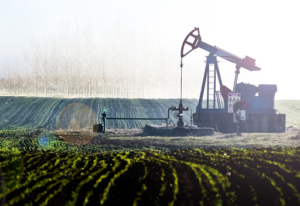
Oil doesn’t turn into a usable product the second it hits the surface, it needs to move through a whole sequence. There’s geological assessment, drilling, production , treatment, followed by transportation and refining. Only after completing multiple stages does it become fuel, asphalt, lubricants, or chemical feedstock.
For investors, this wider process provides important context. A producing well represents only one stage of development. Operators must locate the oil, build the oil well, control the fluids produced, prepare the crude for transport, deliver it to a buyer, and complete the sale. Each step influences project costs and risk.
Oil Is Stored in Rock, Not Underground Lakes
Crude oil is created when ancient organic material is buried, compressed, and heated over long geological periods. It eventually accumulates in porous reservoir rock, where it sits within small connected spaces between grains of sandstone, limestone, or similar sedimentary layers.
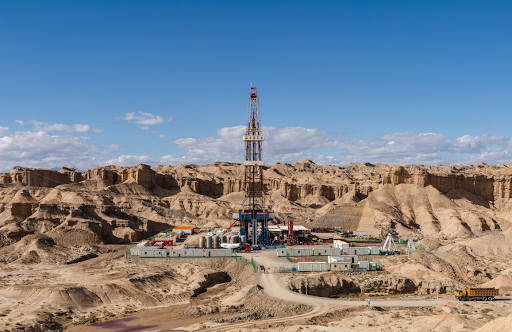
These reservoirs often contain oil, gas, and water together. An impermeable cap rock helps trap the fluids underground and prevents them from migrating farther upward. The reservoir is not an empty chamber filled with liquid. It is a rock formation with fluids held inside its pore spaces. Recovery depends on porosity, permeability, pressure, and how the fluids behave underground.
Before a well is drilled, geologists piece together evidence from several sources. Seismic imaging suggests how underground formations are shaped. Well logs show what earlier wells passed through, including rock layers and fluid zones. Core samples and nearby production records add a closer look at reservoir quality. The result is a more informed drilling target, not a guarantee. A formation can still differ in pressure, depth, flow characteristics, and recoverable volume.
How Drilling Creates a Route to the Reservoir
Once the site is cleared for development, the operator gathers the rights, permits, equipment, and crews needed to begin drilling. The drilling plan guides the work by setting the target depth, reservoir formation, casing design, and pressure-control requirements.
A drilling rig rotates a bit through the rock to create the wellbore. Some wells run straight downward. Others reach the target depth vertically, then turn through the oil-bearing layer. This horizontal section can expose more of the reservoir from one drilling location.
Drilling fluid circulates through the well while the bit is working. It helps cool the bit, carries broken rock back to the surface, and assists with pressure control. As the well gets deeper, crews install steel casing and pump cement around it.
Casing and cement support the well structure while keeping underground formations separate. A well may pass through groundwater, gas-bearing zones, and multiple rock layers before it reaches the intended oil-bearing reservoir. The barriers have to remain reliable throughout the well’s life. The barriers have to remain reliable throughout the well’s life.
Well Completion & Oil to Flow Scenario
Reaching the reservoir is only one part of the job. The well must then be completed so oil and gas can enter the wellbore and travel to the surface.
Production tubing is commonly placed inside the casing before the target zone is opened. Crews then create perforations in the casing, forming controlled entry points between the reservoir and the well. The operator then tests the well’s pressure, flow rate, and mechanical condition before putting it into regular production.
Some conventional reservoirs have enough natural flow for oil to move through the rock on its own. Tighter formations may need hydraulic fracturing to create flow paths for the hydrocarbons. The process pumps fluid and sand into the rock at high pressure. The sand remains behind to help hold the small fractures open.
Natural pressure may bring fluids to the surface during the early life of a well. As pressure declines, the operator may add lift equipment such as a rod pump, gas lift system, or electric submersible pump. Production usually changes over time, often falling as pressure drops and more water is produced.
The Well Produces More Than Crude Oil
The stream arriving at the surface is rarely clean crude oil. It can include associated natural gas, produced water, sand, and other materials from the formation.
At the site, separators divide the production stream into its main components. Oil is directed to tanks or gathering lines. Natural gas may be captured and sent for treatment. Produced water is managed through reuse, reinjection, or disposal under the rules that apply to the operation.
Before reaching a pipeline or refinery, crude must be prepared to meet basic quality requirements. Operators reduce water and salt content because both can damage equipment and create issues during refining.
The grade of crude affects how it is sold and processed. Light crude tends to flow more easily and can yield a larger share of transport fuels. Heavy crude generally demands more intensive refinery processing. The amount of sulfur also affects value, as higher-sulfur crude must go through added treatment.
The Role of Pipelines & Transportation Means
Once crude has been treated and stored, it needs to leave the field. Pipelines are generally suited to regular, high-volume crude movement. In locations without pipeline connections, oil may be carried by truck, rail, barge, or tanker.
Transport affects the price a producer actually receives. The market price quoted in the news does not account for every project’s location, quality differences, pipeline fees, storage costs, or local supply conditions. A barrel produced far from refinery capacity may be worth less at the wellhead than one produced near established infrastructure.
Gathering systems move production away from individual wells. Long-distance pipelines carry crude to storage hubs, refineries, and export terminals. Storage helps manage the timing difference between ongoing production and refinery intake.
What Do Refineries Do? How To Get Finished Products
A barrel of crude oil contains many types of hydrocarbons. The refinery’s job is to separate them, clean them, and process them into fuels and materials that meet quality standards.
The first stage is distillation. Crude oil is heated and sent into a tall distillation tower. Lighter components move toward the top, while heavier ones settle lower down. This divides the crude into streams based on their boiling ranges.
Many of those streams need further work. Heavy molecules can be broken into lighter ones through cracking. Other components are treated to remove sulfur or adjusted to improve fuel quality. Refineries also blend products carefully so gasoline, diesel, jet fuel, and heating oil meet specifications.
One barrel of crude may eventually contribute to gasoline, diesel, jet fuel, lubricants, asphalt, petroleum coke, and petrochemical feedstocks. The exact mix depends on the grade of crude and the equipment available at the refinery.
Conclusion
The oil supply chain includes several business models. Upstream companies explore, drill, and produce. Midstream companies gather, store, process, and transport. Downstream companies refine crude and sell finished products.
Each stage has different cost drivers. For upstream assets, returns depend on how wells perform, how quickly production declines, what operations cost, and where oil prices move. Midstream assets rely on volume, contracts, maintenance, and capacity use. Refiners must manage crude costs, product demand, outages, and changing margins.
For direct investors, well economics remain central. Strong geology can lose value when transport is expensive or operating costs rise.
Understanding how oil is extracted and processed helps investors judge a project in context. The well, surface equipment, transport network, and refinery market all influence the value of each barrel. A clear view of the process helps investors evaluate production forecasts, cost assumptions, and the operator’s plan for bringing oil to market.