Skip to content


The appeal of artificial intelligence in oil and gas comes from the scale of the industry’s data. A single asset can produce continuous measurements from wells, pumps, compressors, pipelines, and processing equipment. These readings must be considered alongside seismic interpretation, drilling reports, maintenance history, satellite images, and older production records. Reviewing the full picture by hand can take too long. AI helps technical teams identify patterns, rank anomalies, and locate areas that deserve further investigation.
Its usefulness depends on how it is applied. AI does not make discoveries without geological work or resolve poor project economics on its own. It is better understood as a tool that helps skilled teams analyse information faster, respond to problems sooner, and reduce repetitive workload.
Better Data Can Improve Decisions
AI systems work by learning from large data sets. In oil and gas, those data sets may include information from wells, production facilities, pipelines, and maintenance programs. The system looks for relationships in past activity, then uses those relationships to flag unusual conditions or estimate what may happen next.
Useful information can come from many places:
- Seismic surveys and geological models
- Drilling speed, torque, pressure, and vibration readings
- Production rates, water cut, and reservoir-pressure data
- Inspection reports and equipment repair histories
- Pipeline sensor data and aerial monitoring
- Weather, logistics, and commodity-market information
An AI system is only as dependable as the information behind it. Historical well files may have gaps, while sensors may fail or use different calibration standards from one field to another. A shutdown might appear in production data even though the explanation is stored in a separate maintenance system. When those records are incomplete or inconsistent, the model may return a confident result based on a faulty picture.
Much of the real work therefore happens before the model is used. Teams must clean and organise records, agree on common definitions, validate measurements, and assign responsibility for reviewing and responding to alerts.
Finding Patterns Before Drilling Begins
Geologists have long combined seismic data, well logs, and subsurface knowledge when selecting drilling targets. AI adds another analytical tool by processing extensive seismic datasets and searching for rock patterns associated with productive wells in comparable locations.
That does not remove the uncertainty below ground. Reservoir quality, pressure, and rock structure can vary widely, limiting how well a model transfers between fields. AI is most useful for reducing the number of possible targets and helping geologists decide where deeper technical analysis should begin.
In development planning, AI can also help compare potential well locations. It may consider:
- Nearby well performance
- Reservoir thickness and rock properties
- Completion design
- Distance from existing pipelines and facilities
- Drilling and operating history in the area
The result is a more informed starting point for the team, rather than an automatic drilling decision. Human judgment remains central, particularly when a model encounters conditions it has not seen

Supporting the Drilling Crew
Drilling is expensive, time-sensitive work. As the bit moves through the earth, the crew must manage changing rock formations, pressure, fluid properties, and equipment condition. Small problems can become costly if they are missed for too long.
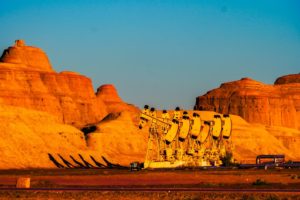
AI can review live rig data and identify readings that depart from an expected pattern. A change in vibration may point to wear on drilling equipment. An unusual pressure trend may indicate that the team needs to pause and assess the well conditions. The system can bring the signal forward quickly, leaving the crew to decide what it means and how to respond.
Used well, these tools can help reduce:
- Nonproductive time
- Unplanned equipment damage
- Repeated manual data checks
- Delays in recognising developing issues
There is an important limit here. A drilling rig is a safety-critical environment. An alert from an algorithm should prompt a review, not replace established well-control procedures or the judgement of people on site.
Managing Production After the Well Is Online
Once production begins, a well’s output and operating needs continue to change. Flow rates may decline, water production may rise, and equipment can lose efficiency or develop faults. Engineers traditionally assess these changes using reports, trend analysis, and field observations. AI helps by comparing performance across multiple wells and identifying where closer review may be needed.
For example, a model may identify a well whose pressure, fluid mix, or power use has shifted from its usual pattern. That change could reflect normal reservoir behaviour. It could also point to scaling, equipment wear, a developing restriction, or another operational issue.
Digital twins can help operators test decisions before applying them to physical equipment. Built from operating data, these models represent assets or processes such as compressors, wells, and separation facilities. Engineers can use them to assess how different settings may affect performance, reliability, or output.
Their practical value lies in directing attention. Across a large asset base, a model may identify the few unusual wells that need prompt action while allowing routine variations to remain under normal monitoring.
Predictive Maintenance Can Reduce Disruption
When essential equipment breaks down unexpectedly, the operator may lose production and face a rushed, expensive repair. The failure can also disrupt crews, equipment, and maintenance work already scheduled elsewhere.
Predictive maintenance helps teams identify problems before that point. It compares vibration, temperature, pressure, operating time, and repair history to detect patterns associated with failure. The asset can then be inspected or replaced during a planned maintenance window.
The approach works best when there is enough reliable history to compare. A newly installed asset or an unusual operating environment may not provide a model with many useful examples. It also cannot account for every possible failure. Regular inspections, maintenance records, and technician experience still carry real weight.
AI Has a Role Beyond the Well Site
The same principles apply across pipelines, gas-processing plants, refineries, and environmental programs. Pipeline teams can use AI-assisted analysis to review flow patterns and identify readings that merit further investigation. Refiners may use it to plan maintenance, manage energy consumption, and improve the consistency of complex operating processes.
AI can also support methane monitoring. Data from fixed sensors, aerial surveys, and satellite observations can be reviewed more quickly to identify possible emissions sources. A flagged reading is not proof of a leak. It gives the operator a reason to inspect the equipment or site sooner.
As systems become more connected, cybersecurity needs to stay in the conversation. Digital tools can create new exposure where operational technology, cloud platforms, and field equipment interact. Companies introducing these tools can draw on pipeline cybersecurity guidance and the NIST AI Risk Management Framework when setting controls, testing systems, and assigning oversight.
Conclusion
AI is becoming another technical resource within oil and gas, supporting work from exploration through production, maintenance, and environmental management. Its strongest applications are often narrow and practical, including seismic review, drilling surveillance, equipment monitoring, and the analysis of changing well conditions.
For investors, the presence of an AI initiative is less important than its execution. The company should be able to explain the problem being addressed, the quality of the data, who reviews the output, how teams respond, and what measurable improvement the system has delivered. AI can strengthen an operator’s discipline. It cannot compensate for weak geology, poor execution, or an uneconomic asset.