Skip to content

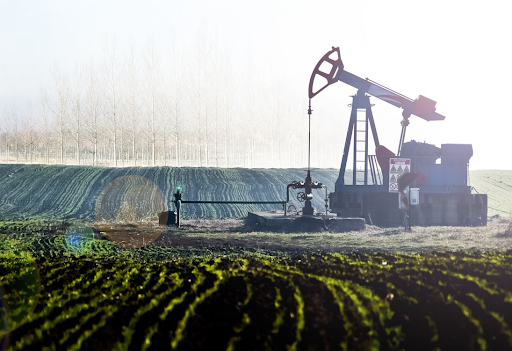
Natural gas is an important fuel source for homes, businesses, power plants, and industrial facilities. It is used for heating, electricity generation, manufacturing, and the production of chemicals and fertilizers. Yet before natural gas reaches a burner, power plant, or export terminal, it moves through a complex chain of exploration, drilling, processing, transportation, and storage.
Understanding that path helps investors see why a productive well is only one part of a natural gas project. The quality of the resource, operating costs, processing capacity, pipeline access, and end-market demand all influence the value of the gas produced.
What Is Natural Gas?
Natural gas is a fossil fuel made primarily of methane, a hydrocarbon with one carbon atom and four hydrogen atoms. It may also contain natural gas liquids, water vapor, carbon dioxide, nitrogen, hydrogen sulfide, and other compounds.
It formed over millions of years as organic material was buried beneath layers of sediment and exposed to heat and pressure. The gas can collect in porous rock formations underground, sometimes on its own and sometimes alongside crude oil.
Natural gas occurs in several settings:
- Conventional reservoirs, where gas can move more easily through the rock
- Shale and tight-rock formations, where gas is held in very small pores
- Oil reservoirs, where it is produced as associated gas
- Coal seams, where it is known as coalbed methane
The geological setting affects how the resource is developed. Conventional formations may allow gas to flow more readily to the well. Shale and tight formations often require horizontal drilling and completion techniques designed to create pathways through the rock.
Finding and Drilling for Natural Gas
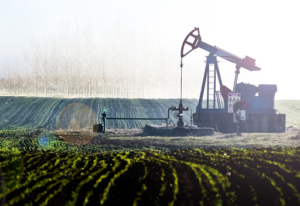
Before drilling begins, geologists review seismic surveys, well records, rock samples, and production data from nearby areas. Seismic surveys use sound waves to create an image of underground rock formations and help identify promising drilling targets.
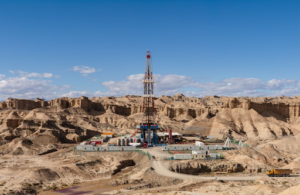
If an exploratory well confirms that a formation holds enough recoverable gas, the operator may drill one or more development wells. These wells can be vertical or horizontal. Horizontal wells are common in shale plays because they allow the operator to reach a longer section of the gas-bearing formation from a single surface location.
The drilling process includes several important steps:
- Securing mineral rights, permits, and surface access
- Drilling through rock to the target formation
- Installing steel casing to support the wellbore
- Cementing the casing to isolate underground formations
- Testing the well for pressure, flow, and integrity
Drilling is capital-intensive, and the cost can vary widely by depth, location, well design, and local service conditions. A successful well must also have a practical route to processing facilities and pipelines.
Completing the Well and Producing Gas
After drilling reaches the target formation, the operator completes the well so gas can flow into the wellbore. Completion work may involve perforating the casing near the producing zone, installing production equipment, and connecting the well to gathering lines.
In shale or tight-rock formations, hydraulic fracturing may be used. Water, sand, and additives are pumped into the formation under pressure to create fractures in the rock. The sand helps keep those fractures open, allowing natural gas to move toward the well.
At the surface, gas is collected through small gathering pipelines. The production stream may also include water, natural gas liquids, and other substances that need to be separated before the gas can enter a larger transmission network.
Production is rarely constant over the life of a well. Output can be strong early on and decline over time. Operators monitor pressure, flow rates, equipment performance, and maintenance needs throughout the producing life of the asset.
Processing Turns Wellhead Gas Into Marketable Gas
Gas produced at the wellhead is often called wet natural gas because it contains more than methane. Before it can be sold into most pipeline systems, it must meet quality standards for heating value, water content, and impurities.
At a processing plant, the gas may be treated to remove:
- Water vapor
- Carbon dioxide and nitrogen
- Hydrogen sulfide and other sulfur compounds
- Natural gas liquids such as ethane, propane, and butane
The processed product is known as dry gas or pipeline-quality natural gas. Natural gas liquids are separated and sold as distinct products, often into petrochemical, heating, and transportation markets.
This stage has a direct effect on project economics. Processing costs, plant access, and the value of recovered natural gas liquids can all influence the net revenue received by a producer.
Moving Natural Gas Through Pipelines and Storage
Once processed, natural gas enters a pipeline system. Gathering lines move gas away from the well site. Larger transmission pipelines carry it across producing regions and toward major demand centers. Local distribution companies then deliver gas to homes, commercial buildings, and smaller businesses.
Processing, transportation, and storage are closely linked. Natural gas demand often rises during colder months, while production may remain relatively steady. Underground storage facilities help balance that difference by holding gas until demand increases.
Pipeline access matters because a producing field without sufficient takeaway capacity can face lower realized prices or restricted production. Investors reviewing a natural gas project should understand:
- Where the gas will be processed
- Which pipeline system will receive it
- Transportation and gathering costs
- Whether firm capacity or sales contracts are in place
- The market index used to price production
How Natural Gas Reaches Global Markets
Pipelines are the most common way to transport natural gas within connected regions. For markets separated by oceans, natural gas can be converted into liquefied natural gas, or LNG.
LNG facilities cool natural gas to a very low temperature, reducing its volume enough for shipment by specialized tanker. At the destination, the LNG is warmed and returned to a gaseous state through regasification. It can then enter local pipeline systems for use by power plants, industry, and consumers.
Liquefied natural gas has expanded the reach of natural gas producers by connecting supply in one region with demand in another. It also adds another layer of cost, infrastructure requirements, and market exposure.
Conclusion
Natural gas investments depend on more than the volume of gas in the ground. A project needs sound geology, capable operators, reliable infrastructure, and a viable market for its production.
Upstream investors may be exposed to drilling results, reserve estimates, production decline, and commodity prices. Midstream assets depend on throughput volumes, contracts, pipeline capacity, and operating reliability. LNG projects also depend on long-term demand, shipping economics, and terminal performance.
A well with strong production can still face weaker returns if processing costs rise or takeaway capacity is constrained. Careful due diligence should assess the full journey from the reservoir to the customer, along with the assumptions behind projected cash flow.