Skip to content

Introduction
Shale oil is one of the most transformative developments in the modern energy sector. Once considered uneconomical to extract, shale oil now contributes significantly to global supplies thanks to advanced drilling methods. The United States leads this movement, turning shale formations into key oil fields. This transformation has reshaped both oil production and investment strategy.
Beyond production gains, the shale boom has also changed how capital flows into the energy sector. Unlike conventional oil megaprojects that require years of planning and billions in upfront investment, shale projects operate on shorter development cycles with more predictable timelines. This has made them particularly attractive to private equity firms, hedge funds, and publicly traded energy companies seeking faster returns and greater operational control. As a result, shale has introduced a more agile, market-responsive investment model into an industry traditionally defined by long-term commitments.
As interest grows, shale oil investment stands out within the energy sector. Its rapid production cycle and adaptability to market shifts attract both institutional and individual investors. Shale oil has become more accessible to a broader range of investors through various financial structures. These include publicly listed exploration and production companies, energy-focused exchange-traded funds (ETFs), and direct participation programs such as drilling partnerships. This allows investors to tailor their exposure based on risk tolerance, capital availability, and investment horizon. Shale oil is no longer limited to large energy corporations but has evolved into a more widely distributed investment opportunity.
This article takes an in-depth look at shale oil, its extraction process, and the investment opportunities it presents.
What Is Shale Oil?
Shale oil, also called tight oil or light tight oil, is a light crude oil contained within shale and other low-permeability rock formations. The dense, fine-grained rocks prevent oil from flowing freely, which is what distinguishes oil from conventional oil. (Note: “shale oil” should not be confused with “oil shale,” which is a type of rock that contains kerogen rather than crude oil.)
In traditional reservoirs, oil flow is much smoother, making extraction relatively straightforward. Shale rocks, by contrast, present a far more complicated challenge that requires advanced technology to overcome.
From the investment viewpoint, this distinction is important. The complexity of extracting shale oil directly affects both its cost structure and the project timelines, which are two critical factors investors must evaluate.
How Shale Oil Is Extracted
The growth of shale oil production would not have been possible without major technological breakthroughs. These two key advances have enabled large-scale extraction of shale oil.
Hydraulic Fracturing (Fracking)
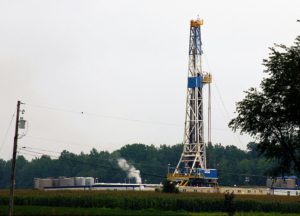
Hydraulic fracturing involves injecting a mixture of water, sand, and chemicals into rock formations under high pressure. This breaks up the rock and allows oil to flow into the well. Although the concept is relatively simple, its impact has been enormous. Fracking has unlocked previously untapped reserves, thereby increasing global oil supply.
Horizontal Drilling
Horizontal drilling complements fracking to make the process even more efficient. Once the drill bit reaches the target rock layer, it turns sideways and drills laterally through the formation. This method allows a single well to access far more oil, thus making operations more productive and cost-effective. Today, nearly all new U.S. crude oil wells are drilled horizontally or directionally.
The Rise of Shale Oil in the Energy Industry
The rapid growth in shale oil production has transformed the global energy map in a manner that few could have anticipated.
Growth in the United States
The United States has been at the epicenter of the shale revolution. Regions such as the Permian Basin, Bakken Formation, and Eagle Ford Shale have seen significant development over the past two decades. According to the U.S. Energy Information Administration (EIA), the Permian Basin alone produced about 6.0 million barrels per day of crude oil in late 2025, roughly 44% of total U.S. oil production. Total U.S. crude oil output has reached record levels of approximately 13.5 million barrels per day, which reduced reliance on imports and strengthened the U.S. position in global energy markets.
Impact on Global Markets
As the shale oil supply increases, its impact is being felt worldwide. The rise in supply has influenced the pricing of oil. In most cases, it has led to a decrease in global oil prices. Research from the International Monetary Fund (IMF) shows that U.S. shale oil added roughly 5 million barrels per day to the global crude oil market, with U.S. petroleum production accounting for about 60% of world petroleum supply growth from 2011 to 2015. . This sustained increase contributed to the major oil price declines of 2014-2015 and continues to shape global supply dynamics today.
The emergence of shale has also intensified competition which put pressure on traditional oil-producing countries and OPEC’s market influence. For investors, this has led to a more complex but more dynamic market.
Benefits of Shale Oil Investment
Shale oil investment opportunities continue to generate interest for several practical reasons, especially when compared to conventional oil investments.
High Production Potential
One of the main advantages is that shale oil wells produce at a faster rate than conventional wells in their early months. This means returns can be realized more quickly, depending on market conditions.
Another advantage is that a new well can be drilled in the same area, providing continuous production opportunities without starting an entirely new project.
Scalability and Flexibility
Shale oil production also offers exceptional flexibility. They can be adjusted relatively quickly in response to price fluctuations: drilling can ramp up when oil prices rise and scale back when prices fall. This level of responsiveness is uncommon in conventional projects, which typically involve much longer development timelines and larger upfront commitments.
Economic and Strategic Advantages
Besides its direct contribution to investment returns, the role of shale oil is important in the broader economic development and energy policies.
Job Creation and Economic Growth
Shale production supports a wide range of industries, including drilling services, transportation, and equipment manufacturing. This generates jobs and drives economic growth in key production regions, while also contributes to infrastructure development, including road and pipeline construction.
Energy Security
Another factor that should be taken into consideration is energy security. Shale-rich countries can become self-sufficient and reduce reliance on foreign oil supplies. This helps them maintain greater control over their energy markets, particularly during periods of global uncertainty.
Risks and Challenges of Shale Oil Investment
Despite its advantages, shale oil investments are not without risks. It is necessary to understand the risks involved in order to make an informed decision.
Price Volatility
Oil price volatility is a constant feature of the market, and shale oil investments are no exception. A drop in oil prices has a direct impact on returns and can quickly slow the pace of production, as seen in 2025 when lower prices and reduced rig counts led the EIA to forecast a modest decline in U.S. output through 2026.
Environmental Concerns
Environmental issues continue to be of significant concern. Water usage in fracking, methane and greenhouse gas emissions, and impacts on land have all placed companies under scrutiny. As regulations continue to evolve, companies may need to allocate more resources to remain in compliance.
High Initial Costs
Shale oil projects are capital-intensive. Although production can be achieved relatively quickly, maintaining output requires continuous drilling because shale wells decline far faster than conventional ones. Industry data show that tight oil wells often lose roughly 50% to 70% of their initial production in the first year alone, with the majority of total recovery coming within the first two years. This means operators must keep drilling new wells to maintain output, which can be challenging when market conditions are unfavorable.

Real-World Examples of Shale Oil Projects
Examining real-world examples helps illustrate how shale oil investment works in practice.
Major Shale Basins
The most notable of the major shale areas include:
- Permian Basin (West Texas and southeastern New Mexico)
- Bakken Formation (North Dakota and Montana)
- Eagle Ford Shale (South Texas)
These areas have been able to sustain investment over the years due to their well-developed infrastructure and long production histories. The Permian alone has driven much of the recent growth in U.S. production, and it continues to dominate output even as other basins have plateaued or declined.
Successful Investment Cases
Several companies illustrate how scale, technology, and disciplined operations have driven success in the U.S. shale industry:
- ExxonMobil completed its $59.5 billion acquisition of Pioneer Natural Resources in May 2024, more than doubling its Permian footprint to over 1.4 million net acres and an estimated 16 billion barrels of oil-equivalent resource. The combined business is expected to produce around 2 million barrels of oil equivalent per day in the Permian by 2027.
- Diamondback Energy has grown into a major Permian-focused independent through acquisitions, including its 2024 deal for Endeavor Energy Resources, while consistently ranking among the lowest-cost producers in the basin.
- ConocoPhillips has expanded its low-cost shale portfolio through deals such as its $9.5 billion acquisition of Shell’s Delaware Basin assets in 2021 and its acquisition of Marathon Oil, strengthening its position across the Permian, Eagle Ford, and Bakken.
These cases reflect a broader industry trend that as the easiest acreage has been developed, growth has increasingly come from consolidation, longer horizontal lateralls, and improved completion techniques.
Future Outlook for Shale Oil Investment
The role of shale oil is expected to continue evolving in response to shifting trends in technology and policy. Major agencies project that the U.S. tight oil production will grow more slowly in the coming years than it did during the boom decade.
Technological Advancements
Technological advancements are expected to continue, leading to efficiency and a lower environmental impact, particularly through improved drilling accuracy, longer laterals, and more sustainable production methods.
Balancing Energy Demand and Sustainability
Although the global energy shift is gaining momentum, oil remains a significant source of energy for the world. Shale oil is especially well-positioned to adapt to changing trends thanks to its operational flexibility and shorter project timelines.
Conclusion
The rise of shale oil has fundamentally changed how oil is extracted and how energy investments are made. Its rapid production cycle and market adaptability have made it an essential part of the energy industry.
At the same time, shale oil investment carries real risks that require careful analysis. Investors need a clear understanding of both the opportunities and the challenges involved. As the energy landscape continues to evolve, so too will the conversation around shale oil.
FAQs
1. What is shale oil investment?
Shale oil investment refers to funding projects that extract oil from shale and other low-permeability rock formations using advanced technologies such as hydraulic fracturing and horizontal drilling.
2. Is shale oil profitable?
Shale oil investment can be profitable depending on the price of oil, the efficiency of the investment, and the cost structure. Although shale oil investment has a faster production cycle compared to conventional oil investment, profitability fluctuates with market conditions and the rapid decline of individual wells.
3. What are the main risks of shale oil?
The main risks associated with shale oil investment include the oil price volatility, environmental concerns, regulatory pressures, and high capital requirements. In addition, shale oil wells tend to decline much more quickly than conventional wells, often losing 50% or more of their initial output within the first year, which means operators must continuously invest in new drilling to maintain production.