Skip to content

Introduction
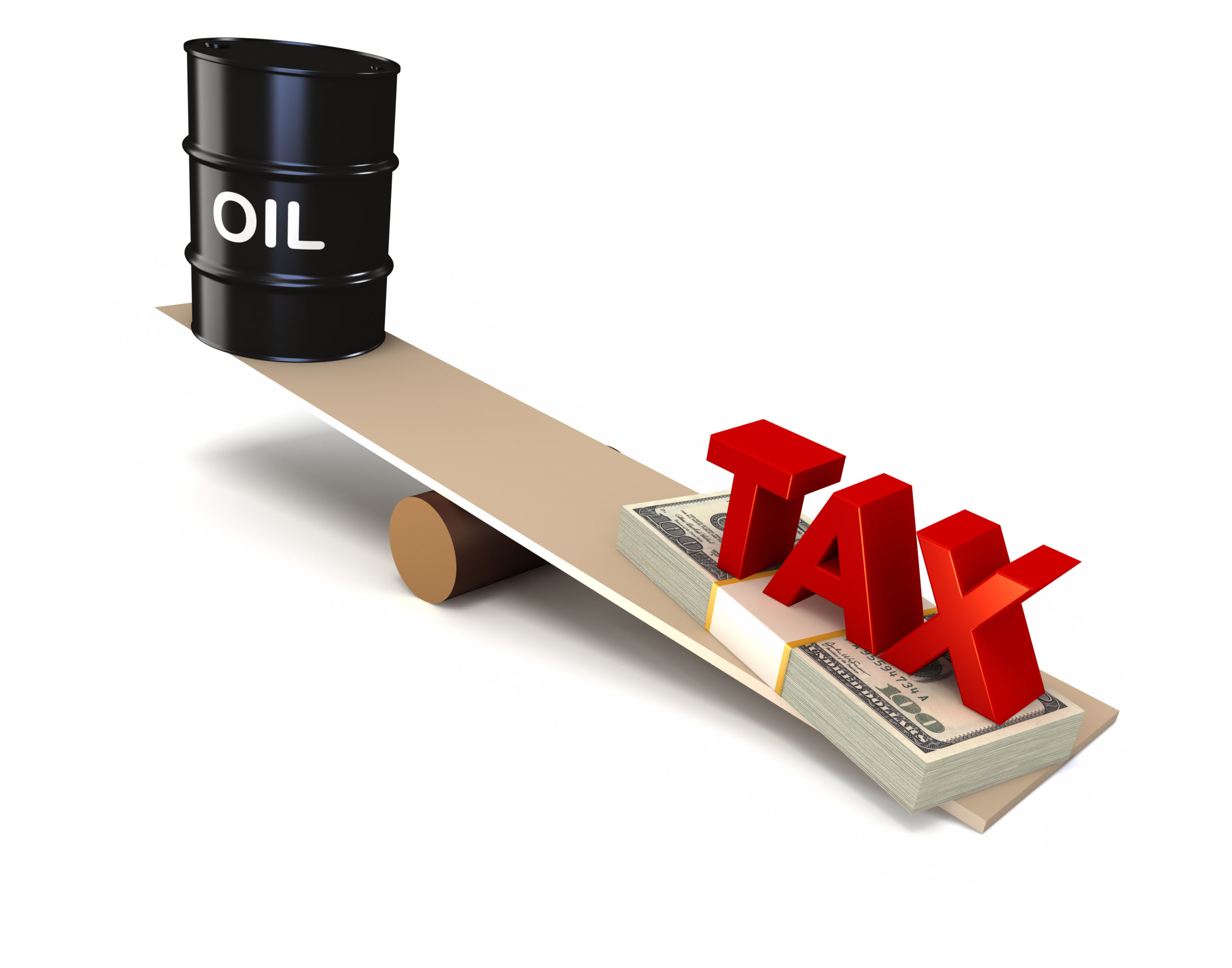
The term “tax shelters” is often debated, particularly when it comes to oil and gas investments. While some consider investing in oil and gas potentially risky and complex, other investors assume that business opportunities in this sector come with significant tax benefits. The contrasting beliefs lead to the ultimate question as to whether oil and gas investments genuinely function as a tax shelter or are an overstated belief.
After years of looking at how these deals actually perform on the page and on the K-1, the trust is more practican than either camp suggests. Oil and gas investments do offe some of the most generous tax treatment in the U.S. tax code.
But, those benefits come with conditions, risks, and a fair amount of misinformation around them. This article separates what’s real from what’s repeated, so you can evaluate the opportunity on its actual merits.
What Are Tax Shelters?
A tax shelter, in plain terms, is any legal arrangement that reduces, defers, or otherwise manages taxable income. Congress writes these provisions deliberately, usually to a channel private capital into sectors if wants to encourage, such as retirement savings, housing, infrastructure, and domestic energy.
It’s worth drawing the line clearly that tax shelters can be categorized as legitimate tax planning or abusive tax shelters, and there is a clear distinction between the two. While legitimate tax planning complies with tax laws and regulations, abusive tax shelters are known to exploit the loopholes in the law, which may lead to legal consequences if challenged in the court of law by tax authorities.
Oil and gas sits firmly in the legitimate category, but only when structured correctly.
Types of Tax Shelters
There are three basic types of tax shelters.
- The first kind of tax shelter is retirement and long-term investment accounts. These vehicles like 401(k)s, IRAs, and similar plans that defer tax on contributions or investment gains until withdrawal. This tax shelter encourages disciplined, long-horizon saving.
- The second tax shelter is real estate, where depreciation, mortgage interest deductions, and the ability to offset income with property-related losses make property ownership a perennial favorite among high earners.
- The third is industry-specific incentives, including oil, gas, and renewable energy. These are the deductions, credits, and allowances Congress has built into the code to encourage capital formation in sectors it considers strategically important.
Why Oil & Gas Investments Are Linked to Tax Shelters
The U.S. tax code has treated oil and gas drilling favorably for over a century. The intangible drilling cost deduction has been on the books since 1913. It’s because policymakers have consistently wanted private capital flowing into domestic energy production. Drilling is expensive and risky; without favorable tax treatment, far less of it would happen.

What investors get in return is a combination of deductions that together can be substantial. Intangible drilling costs (IDCs) typically represent 60% to80% of the cost of drilling a new well, and qualifying investors can often deduct them in the year they’re incurred rather than capitalizing them over the life of the project.
Depletion allowances let producers and royalty owners recover their investment as reserves are extracted. Tangible equipment, such as rigs, casing, and pipelines, depreciates on a standard schedule, usually seven-year MACRS.
But, these benefits don’t make the underlying investment any safer. A dry hole is still a dry hole. A well that produces below projections is still a financial disappointment, regardless of how the tax treatment looks.
Government Incentives in the Energy Sector
Federal energy has used the tax code to incentivize domestic fossil fuel exploration and production because it’s strategically valuable, drilling is high-risk, and deductions help offset that risk so capital keeps flowing. State-level treatment vary considerably and sometimes includes additional credits, or conversely, add-backs that reduce the federal benefit. Anyone evaluating a deal needs to look at both layers.
Myth vs Reality: Are Oil & Gas Investments True Tax Shelters?
There’s a kernel of truth in the “tax shelter” label and a great deal of exaggeration around it. The reality is that oil and gas investments offer real, codified tax advantages, but they don’t deliver the risk-free, tax-free returns some promotional pitches imply.
Myth: Oil & Gas Investments Eliminate Taxes Completely
This one comes up constantly. No legitimate investment eliminates federal tax liability outright. IDC deductions, depletion, and depreciation reduce taxable income, sometimes substantially, but they don’t make taxes vanish. High-income investors who claim large IDC deductions can also trigger Alternative Minimum Tax (AMT) issues that claw back part of the benefit.
Reality: Tax Benefits Come with Conditions
Whether an investor can actually use these deductions depends on several factors most pitch decks gloss over.
Independent vs. integrated producer status matters: independent producers can typically expense 100% of IDCs in the year incurred, while integrated oil companies are limited to a 70% immediate deduction with the remaining 30% amortized over 60 months. Most retail investors participating in a drilling program qualify on the independent side, but the structure of the deal determines the answer.
Working interest vs. limited interest is the other major dividing line. A direct working interest with unlimited liability is treated as nonpassive, meaning early losses driven by IDCs can offset wages, business income, and other ordinary income. The same investment held through an LLC or LP without material participation is generally passive, and losses may be deferred until there’s passive income to absorb them.
Production performance drives depletion and the long-term return profile. If the well underperforms, the deductions on the front end won’t make up for it.
Myth: These Investments Are Risk-Free Because of Tax Advantages
A 35% or 37% marginal-rate deduction recovers a meaningful portion of an investment, but it doesn’t make the rest of the capital safe. Oil prices swing. Wells come in below expectations. Operators run into mechanical problems or regulatory delays. The tax code can soften a bad outcome, but it can’t prevent it.
Key Tax Advantages Explained Simply
Below are how some key tax advantages actually work in practice.
Intangible Drilling Costs (IDCs)
Intangible Drilling Costs (IDCs) are certain expenses that have no salvage value, including labor, drilling fluids, fuel, site preparation, hauling, and similar expenses. Tangible items like casing, pumps, and storage tanks aren’t IDCs; they’re depreciated separately.
Under IRC §263(c) and Treasury Regulation 1.612-4, qualifying investors can elect to deduct IDCs in the year they’re incurred rather than capitalizing them. Because IDCs typically run 60% to 80% of total drilling costs, this is by far the largest first-year tax benefit in the sector. An investor putting $100,000 into a drilling program might generate $65,000 to $80,000 in deductible IDCs in year one, though the actual deductibility for any given investor depends on producer status, participation level, at-risk amounts, and AMT exposure.
Depletion Allowance
Depletion is the natural-resource equivalent of depreciation. It lets owners recover their investment as the reserve is produced and sold. There are two methods, and the IRS allows eligible taxpayers to use whichever produces the larger deduction.
Cost depletion is tied to the original investment and the estimated recoverable reserves. Essentially, you write off a proportional share of your basis as units are produced. The total deduction over the life of the property is capped at the original capital invested.
Percentage depletion lets eligible taxpayers deduct a fixed percentage—15% for oil and gas—of gross income from the property, regardless of basis. It’s available only to independent producers and royalty owners, capped at the first 1,000 barrels per day of oil (or 6,000 mcf of natural gas), and limited to 65% of the taxpayer’s taxable income from all sources, with the unused portion carrying forward. Integrated oil companies don’t qualify.
Percentage depletion is valuable because it can continue producing deductions even after the original investment has been fully recovered, which is why it’s often the more advantageous method over a long-producing well’s life.
Tangible Asset Depreciation
Physical equipment and infrastructure, such as rigs and pipelines, constitute tangible asset depreciation. The standard schedule is seven-year MACRS, and depending on the current law, certain assets may qualify for bonus depreciation. The deduction is smaller in any single year than IDCs, but it provides a steady offset across the productive life of the project.
Risks and Limitations Investors Should Know
Before investing in oil and gas, one needs to be aware of the risks and investments that one should consider. Tax efficiency is a feature. The investment has to make sense on its own merits.
Market Volatility and Commodity Prices
Oil and gas revenues track commodity prices, which respond to global supply, OPEC decisions, geopolitical disruption, recessions, and changes in transportation and industrial demand. A well drilled when oil is at $90 looks very different at $50. Investors needs to model returns across a range of price scenarios.
Regulatory and Policy Changes
Tax law is not static. The Inflation Reduction Act and the Corporate Alternative Minimum Tax have already reshaped how some IDC deductions interact with corporate-level taxation, and the subsequent legislation has continued to adjust those rules. Environmental regulation, permitting timelines, and methane and emissions rules also affect operating economics. The investor who assumes today’s rules apply forever is usually disappointed.
Liquidity and Long-Term Commitment
Working interests in oil and gas projects are illiquid. Unlike public stocks or mutual funds, there’s no exchange to sell your stake on, and secondary markets for direct interests are thin. Investors should plan to hold through the productive life of the project, which typically runs years.
Who Should Consider Oil & Gas for Tax Planning?
Investments in Oil and Gas for Tax Planning are not suitable for every investor. Given below are the best-suited options for people looking to invest.
High-Income Investors
The oil and gas industry is a large industry that requires capital investment in huge amounts before one can begin investing. The math of IDC deductions favors people in higher marginal brackets. Someone in the 37% federal bracket gets meaningfully more value from a $100,000 deduction than someone in the 22% bracket. There are greater benefits from deductions because of which high-income investors become the natural choice.
Investors with Diversified Portfolios
Having investors who have diversified portfolios can also serve as a strategic component within the field. Direct oil and gas investments aren’t a substitute for a portfolio’s core holdings. They work best as a sleeve within a broader allocation that already includes equities, fixed income, real estate, and cash.
The risk of a single drilling program is real; the risk to the overall portfolio is manageable when the position is sized appropriately. Diversification also gives investors the flexibility to ride out the inevitable bad years without being forced to sell at the wrong time.
Future Outlook: Changing Perception of Tax Shelters
To make sure the future of investing in oil and gas is evolving, it is important to make sure that regulatory compliances are applicable and transparency is maintained. Likewise, it is also important to notice that the concept of tax shelters is evolving as well.
Increased Scrutiny and Compliance
The IRS continues to look closely at large deductions claimed by high-income taxpayers, and oil and gas deals, particularly those with aggressive promoter structures, sit on the radar. Documentation discipline matters more than it used to. AFEs, invoices, ownership records, and proper elections all need to align. The line between legitimate planning and aggressive avoidance hasn’t moved, but enforcement attention has sharpened.
Shift Toward Sustainable Investments
Capital is moving towaard cleaner energy, and tax incentives are increasingly being layered on top of solar, wind, carbon capture, and other lower-emissions categories. That doesn’t eliminate the case for traditional oil and gas, like domestic production still plays a substantial role in the U.S. energy mix, and the deductions remain in the code, but the competitive landscape for investor capital is changing.
Conclusion
Oil and gas investments occupy a middle ground that doesn’t fit neatly into either the “tax shelter miracle” narrative or the “too risky to consider” dismissal. The deductions are real, codified, and substantial. They’re also conditional, limited, and no substitute for sound underwriting of the actual project.
The investors who do well in this space treat the tax treatment as an enhancement to a deal that already makes economic sense. That’s the lens to bring to any opportunity in the sector, and it’s worth talking to a tax advisor with specific oil and gas experience before signing anything. The general rules in this article are starting points; the application to any individual investor’s situation is where the real work happens.
FAQs
1. Are oil and gas investments considered tax shelters?
Oil and gas investments are known to offer tax advantages, but are not guaranteed shelters. Whether an investor can actually use the deductions depends on producer status, participation level, AMT exposure, and the underlying performance of the wells. Treat the tax benefits as an enhancement to a sound investment, not as the reason to invest.
2. What tax benefits do oil and gas investments provide?
The tax benefits of oil and gas investments are intangible drilling cost (IDC) deductions, which let qualifying investors expense 60–80% of drilling costs in the year incurred; depletion allowances, which recover the investor’s share of the resource as it’s produced (15% percentage depletion is available to independent producers and royalty owners, subject to limits); and depreciation on tangible equipment, typically over a seven-year MACRS schedule.
3. Are tax shelters legal?
Legitimate tax planning is fully legal. Congress wrote the deductions deliberately. Abusive shelters that rely on sham transactions or stretched interpretations are not, and they can result in back taxes, penalties, and interest if challenged. The distinction is whether the structure complies with the actual rules. Working with a tax advisor who specializes in the relevant area is the practical way to stay on the right side of that line. Share