Skip to content

Ever wondered how oil actually gets pulled from deep in the earth? If you’re an accredited investor looking to understand your oil investment opportunities, knowing the different types of oil rigs is your starting point. Each type of rig opens a window into the process, the risks, and the potential returns of oil projects. In this guide, you’ll get clear answers about the main types of oil rigs, what makes each unique, and how your investment choices connect to these technologies.
What Is an Oil Rig and Why Should Investors Care?
An oil rig is a large structure with the job of drilling wells to find and extract oil from deep underground or beneath the ocean. These rigs are the backbone of the oil industry, acting as the first step in the long process that brings oil from the earth to your gas tank or the products you use every day. From the outside, they might all look similar, but the differences can have a big impact on everything from project costs to environmental footprint.
For accredited investors, understanding the types of oil rigs isn’t just trivia. It’s about making informed decisions. The kind of rig used in a project can affect timelines, budgets, risk profiles, and even the sustainability of an oil investment. For example, a land rig drilling in a well-known oil field may have a shorter, more predictable project timeline, while a new offshore rig tackling an unexplored area could face surprises. Knowing this helps you ask the right questions when evaluating oil investment opportunities, whether you’re looking for quick returns or long-term growth.
Land Rigs: The Foundation of Onshore Oil Production
Land rigs are exactly what they sound like, rigs that operate on solid ground. Most of the world’s oil wells are drilled using these rigs, especially in places like Texas, Oklahoma, or the Middle East. These rigs are the workhorses of the industry, and they come in a variety of sizes and configurations to match the needs of each project.
There are several main types of land rigs, including:
- Portable Rigs: These smaller rigs can be broken down and moved from site to site on trucks. They’re often used for shallow wells or exploration drilling, where flexibility is key.
- Conventional Rigs: Larger and more complex, these rigs are designed to stay in one location for an extended period. They’re used for deeper wells and more extensive drilling projects.
- Mobile Rigs: A cross between portable and conventional, these rigs are mounted on wheels or tracks, allowing for quick set-up and tear-down.
The main job of any land rig is to drill vertically or at an angle to reach oil reservoirs underground. Once drilling is finished and the oil is flowing, the rig is usually moved to the next well. Land rigs can drill in a wide range of environments, from arid deserts to frozen tundra, and their adaptability is one of the reasons onshore oil production continues to thrive.
Land rigs are usually less expensive to operate than offshore rigs. They come with fewer weather risks, are easier to supply with equipment and people, and generally have less complex logistics. For investors, land-based oil projects can mean lower upfront costs and shorter project timelines, making them appealing for those looking for a faster return on investment. However, the geology and productivity of the land being drilled still play a major role in determining the outcome. For example, drilling in the Permian Basin (a well-known oil-rich region in Texas) can offer more predictable returns compared to exploring a brand-new area.
Offshore Rigs: Tapping Into Deepwater Potential
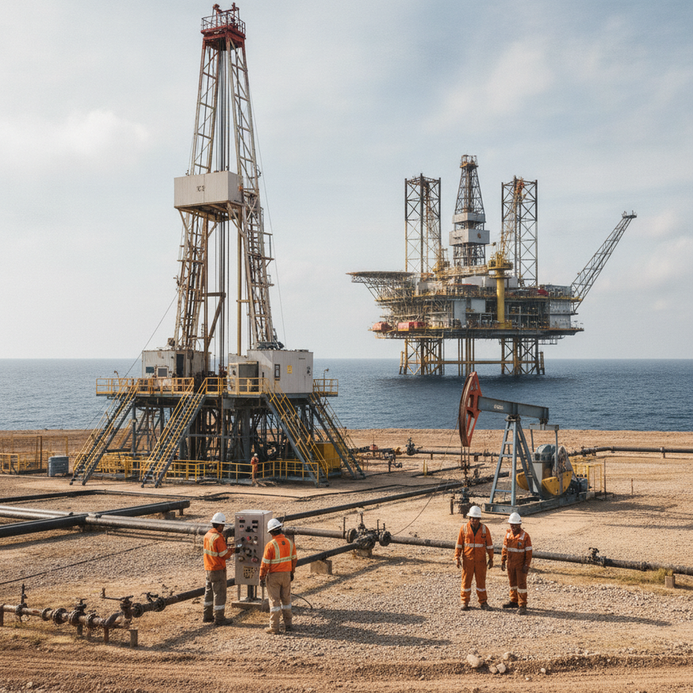
Now let’s talk about offshore rigs. These are the giants you might picture in the middle of the ocean, towering above the waves. Offshore drilling is all about reaching oil trapped under the seabed, sometimes in very deep water and often far from the nearest shore. The ocean environment brings a unique set of challenges, but it also opens access to some of the world’s largest untapped oil reserves.
There are three main types of offshore rigs, each built for specific water depths and drilling needs:
- Jack-up Rigs: These rigs have long legs that rest on the ocean floor. The platform itself can be raised or lowered by moving the legs, making it stable and secure in shallow waters, usually up to about 400 feet deep. Jack-up rigs are commonly used near coastlines or in areas like the North Sea, where water isn’t too deep but the oil reserves are significant.
- Semi-submersible Rigs: These rigs float on large pontoons or columns but are anchored in place by heavy chains or dynamic positioning systems. They’re designed to work in deeper waters, ranging from several hundred to several thousand feet. Semi-submersibles are less affected by waves and weather because much of the structure sits below the surface, allowing them to operate safely in rougher seas.
- Drillships: Imagine a giant ship, but instead of cargo, it carries a full set of drilling equipment. Drillships use advanced positioning systems to hold steady even in open ocean, making them ideal for ultra-deepwater drilling, sometimes more than a mile below the surface. These rigs are at the cutting edge of technology and are often used for exploration in remote, hard-to-reach locations.
Offshore rigs require huge investments and advanced technology. The construction, transport, and operation of these rigs can cost hundreds of millions of dollars. They also come with greater risks, including harsh weather, challenging logistics, and the potential for environmental incidents. For accredited investors, offshore projects can offer access to large oil reserves and potential high returns, but they’re also more complex and costly. The payoff can be substantial, but the journey is often longer and riskier.
How the Type of Rig Shapes Investment Risk and Return
The choice between land and offshore rigs isn’t just technical, it can shape the risk and reward profile of an oil investment. Each type of rig brings its own set of economic, operational, and environmental factors that directly impact your investment.
Land rigs generally mean lower project costs and quicker returns. Because they’re simpler to operate and supply, land-based projects often move from planning to production in months rather than years. This can be appealing for investors looking for shorter timelines or those new to oil investing. The risk profile tends to be lower, too, since land rigs face fewer extreme weather threats and can be relocated quickly if a project doesn’t pan out.
Offshore rigs, especially deepwater projects, carry higher costs and longer timelines, but can unlock massive reserves. These projects can take years to develop and require significant upfront capital. However, if successful, they can produce millions of barrels over decades. The risks are higher, think hurricanes in the Gulf of Mexico or icebergs in the North Atlantic, but so are the potential rewards. Offshore projects are often pursued by larger companies or investment groups with the resources to weather delays and handle complex logistics.
You’ll also want to consider environmental risks. Land rigs usually have a smaller footprint and are easier to monitor, but location matters. Drilling near sensitive areas like rivers or farmland can bring its own challenges. Offshore rigs face stricter regulations and higher cleanup costs if something goes wrong, think of the headlines when there’s an oil spill at sea. Sustainable oil investments often focus on technologies and practices that limit environmental harm, no matter the rig type. For instance, many new offshore rigs are equipped with blowout preventers and real-time monitoring to reduce the risk of spills, while land rigs may use closed-loop systems to prevent contamination of soil and water.
Sustainable Oil Investments: How Rig Choice Plays a Role
Sustainability is becoming a bigger priority for investors and energy companies alike. So how does the type of oil rig connect with sustainable oil investments?
Newer rigs, both on land and offshore, are being designed with better environmental controls. This means more efficient drilling, less waste, and lower emissions. Some projects use closed-loop systems to capture drilling fluids and prevent leaks. Others invest in advanced monitoring to spot potential issues before they become major problems. For example, some offshore rigs now use remotely operated underwater vehicles to inspect equipment, reducing the risk of unnoticed leaks.
In addition, there’s a growing trend toward using rigs powered by cleaner energy sources. Some operators are experimenting with hybrid power systems that combine traditional diesel with solar or wind energy to run equipment on-site. These innovations can reduce the carbon footprint of oil production and appeal to investors who want to balance returns with responsible practices.
Choosing projects that use modern, environmentally friendly rigs can be one way to align your portfolio with your values. At Optimum Energy Partners, we look for partners and projects that balance financial returns with responsible practices, such as protecting nearby wildlife, restoring drilling sites after use, and investing in spill prevention technologies. When you review oil investment opportunities, ask about the rig’s age, technology, and environmental track record. You might find that a company’s approach to sustainability is just as important as its projected returns.
Accredited Investors: What to Ask Before You Invest
Before committing to any oil venture, accredited investors should ask a few key questions about the types of oil rigs involved. Bringing these questions into your due diligence process can help you spot red flags early and identify projects that fit your financial goals and risk comfort.
- What type of rig will be used and why? Ask for details about the rig’s design, age, and suitability for the specific project.
- How does the chosen rig affect the project’s cost and timeline? A land rig might get you to production faster, but an offshore rig could offer larger long-term returns.