
Introduction: The Complex Pulse of Global Energy
The global oil and gas supply chain refers to a complex network involving exploration, extraction, transportation, processing, refining, storage, and distribution of oil and gas. The annual global oil demand stood at around 103 million barrels in 2025, showcasing the enormity of the market served by such complex interrelated processes.
In order to gain insights into the ecosystem, the industry segments oil and gas operations into three inter-related sectors of upstream, midstream, and downstream. Each of the three sectors performs a unique role, but any problem arising in one sector could impact the other sectors.

1. Upstream Sector: Exploration and Production
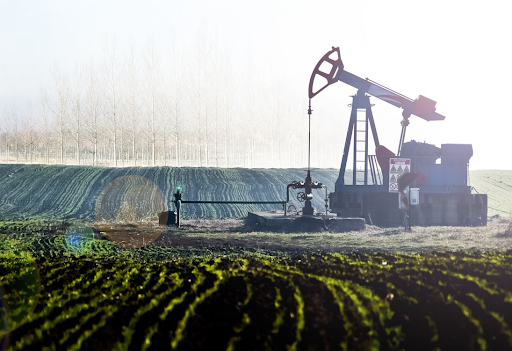
Upstream activities include oil and natural gas exploration, development and production. They include all processes from identifying the formation containing hydrocarbons through drilling to the extraction of crude oil or natural gas.
Exploration consists of applying geological and geophysical methods of investigation to detect subsurface formations that may contain hydrocarbons. Further drilling of exploratory and development wells will help determine if the discovered hydrocarbons could be extracted profitably.
In order to drill and produce hydrocarbons from a well, one needs to first drill through various geological formations. Steel casing and cement are installed to hold up the wellbore and separate the zones within the formation. Once a well has been drilled, production equipment extracts the hydrocarbons from it.
Surface processing separates hydrocarbons produced from the reservoir into crude oil or condensate, natural gas and water. The configuration of this process will vary depending on the characteristics of a particular reservoir and produced hydrocarbons. Sometimes natural gas needs to be processed before it enters the pipeline system.
2. Midstream Sector: Transportation, Processing, and Storage
The hydrocarbon has to be collected, processed, stored and transported to the refinery, the market for gas or petrochemical plants or any other end-users after the process of production. This is the midstream industry that plays an important role in providing the infrastructure between the place of production and these markets.
The process of gathering involves collecting the hydrocarbon produced by each well and sending it to the processing plant. The process of natural gas processing involves removing water, carbon dioxide, hydrogen sulphide and any other impurities together with the separation of natural gas liquids from methane gas.
These NGLs can be further fractionated to produce ethane, propane, butane and natural gasoline.
The transportation of crude oil and its products may be done through the use of pipelines, ships, railways, and others. Very Large Crude Carriers are significant ships for the transport of oil in the international petroleum business. VLCCs usually contain 1.9 million to 2.2 million barrels of crude oil, but the exact capacity will depend on the type of the ship and the cargo.
There is also an importance for the storage facilities. The tank farms, underground storage facilities, and other types of terminals make it possible for the firms and the markets to store their stocks between the time when the product is being produced and consumed.
3. Downstream Sector: Refining, Petrochemicals, and Distribution
Downstream activities involve converting the raw material, which is mostly crude oil and hydrocarbons, into fuels, chemical feedstocks, and other petroleum products before delivering them to commercial and consumer markets.
The process starts with the distillation of crude oil, where the feedstock is heated in order to separate the fractions based on differences in boiling points. There are lighter products that include LPG and naphtha, middle distillates like kerosene and diesel, and also heavier fractions.
Modern refineries also have additional units for converting some of the heavier fractions into more valuable products. Some examples are fluid catalytic cracking, hydrocracking, and coking units, which could provide additional fuel stocks, distillates, light hydrocarbons, and other products. Delayed coking is an example where the heavier fraction is cracked using thermal processing.
Feedstock production for petrochemicals can also be carried out by refineries. This involves processing hydrocarbons like naphtha and ethane to create basic chemicals like ethylene and propylene, which find applications in the manufacturing of plastics and various other industrial materials.
The downstream sector goes far beyond the boundaries of the refining plant. Finished products from the refining process, including fuels and many other products, get distributed via pipelines, terminals, vessels, trucks, and many other means of distribution before reaching the customers.

Supply Chain Volatility, Digitization, and Resilience
The interconnectivity of the oil and gas value chain also increases its susceptibility to disruptions. Political tensions, changes in the output policies of the OPEC+ alliance, weather conditions, interruptions to infrastructural elements, and blockages at significant sea lanes are factors that can disrupt the supply of crude oil, natural gas, and their processed forms.
Disruptions can influence stockpiles, logistics, refinery performance, and ultimately commodity prices. The effect will be determined by the disruption’s location, persistence, availability of spare capacity, stockpiles, and the ability of the players involved to switch to other sources.
Digital technologies have become an integral part of managing this complicated web. IoT sensors can track the performance of pipelines by measuring the pressure, flow rate, equipment condition, and stockpile levels. Digital modeling and digital twins allow operators to assess the performance of their infrastructure and conduct simulations.
Another technological development that is ongoing pertains to methane detection. Through satellites, aircraft, drones, and ground sensors, methane emissions from the production process and transportation can be detected and addressed.
All the technologies described above combined may provide additional information in terms of detection and prevention of leaks and issues related thereto. Their use is beneficial not only due to automation processes but also because of the ability of companies to detect operational problems faster and adapt to market changes.
Conclusion: Orchestrating an Integrated Supply Chain
The oil and gas value chain links the extraction process to the infrastructure for transport, processing, refining, petrochemical facilities, and consumers. The upstream processes are the source of raw hydrocarbons, while the midstream is responsible for moving and conditioning them and the downstream for turning them into fuels and other products.
Given the nature of their close interdependence, efficiency and reliability are based on the integration of the whole chain as opposed to the optimization of any particular link. Digital monitoring systems, automation, enhanced data availability, and emissions detection technologies increasingly help with this integration.
Going forward, in light of the transformation of the world energy system, oil and gas businesses will have to handle traditional supply demands along with changing conditions and requirements related to emissions. It is, therefore, important to understand the connections between the upstream, midstream, and downstream processes when assessing energy flows.